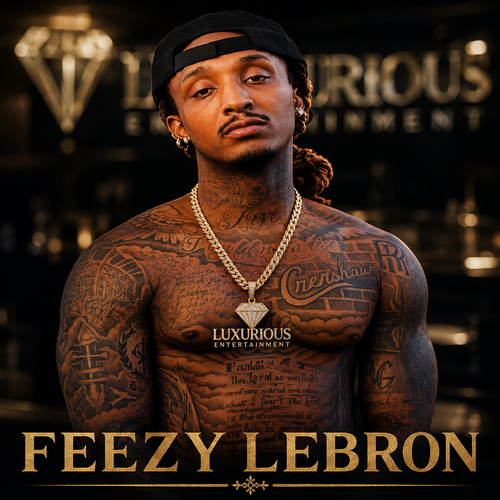
Before an artist’s catalog becomes a timeline, it begins as a series of choices about voice, place and identity. This Backstage archive entry revisits an earlier Feezy Lebron release from the Feezy World era and considers how that work fits the Los Angeles artist’s larger story.
Archive notes
- Artist: Feezy Lebron
- Era: Feezy World
- Context: West Coast hip-hop and the Crenshaw District
- Format: Catalog retrospective
A record of an earlier chapter
Feezy Lebron’s public identity is closely connected to the Crenshaw District and the West Coast rap tradition surrounding it. His artist record describes music shaped by Los Angeles storytelling, independent ambition and community purpose. Returning to an earlier catalog moment makes it possible to hear those ideas before later releases sharpened the picture.
The value of a throwback is not nostalgia by itself. An archive should help listeners understand development: which themes were already present, which production choices locate the music in its time, and which parts of the artist’s voice continued into later work.
The Feezy World frame
The title Feezy World presents the project as more than a collection of songs. It proposes an artist-centered environment—a perspective through which place, pressure, aspiration and personality can be interpreted. That kind of framing matters for an independent rapper because it creates continuity beyond an individual single.
For new listeners, the featured throwback can serve as an entry point into that environment. For longtime supporters, it provides an opportunity to reconsider the record in light of the catalog that followed.
Crenshaw as identity, not decoration
Backstage’s current Feezy Lebron artist file identifies him as a West Coast hip-hop recording artist from Crenshaw and connects his work to community outreach. That geographic context should be treated with specificity. Crenshaw is not simply a keyword or visual backdrop; it is part of a living Los Angeles community with its own history, pressures and creative lineage.
An effective retrospective therefore avoids reducing the music to familiar West Coast imagery. It asks what the performance communicates about the artist’s relationship to the place, how the writing handles local detail and whether the visual record adds information that the audio alone does not provide.
What to watch and listen for
Approach the archived release on two levels. First, listen for the record’s immediate construction: vocal tone, cadence, arrangement, hook placement and the relationship between the beat and the performance. Second, consider the identity work around it: styling, location, recurring symbols and the way Feezy addresses the camera or listener.
These elements can reveal an artist establishing the rules of his world. They also create useful points of comparison with later catalog entries such as “Crenshaw” and the 2023 collaboration “Toxic” featuring Wiz Khalifa, both listed in Feezy Lebron’s current Backstage profile.
Why independent catalogs need real archives
Older releases are often buried beneath platform feeds, broken embeds and incomplete metadata. A professional label archive should preserve the master artwork, credits, release date, contributors, lyrics where authorized, original video, press materials and high-resolution photography. It should also distinguish verified facts from later recollection.
That preservation is not only historical. A clear archive makes licensing, anniversary coverage, catalog marketing and research easier. It allows a new audience to enter an artist’s story without relying on disconnected social posts.
From throwback post to catalog record
This page should ultimately include the exact song title, original release date, producer, featured performers, director, location and an official audio or video embed. If those credits cannot be verified, they should remain unpublished rather than being reconstructed from memory. Once confirmed, they can be added in a compact credit block beneath the media.
That approach turns a brief “throwback” into durable editorial documentation: an earlier Feezy Lebron moment, preserved with enough context to show where it belongs and why it still matters.