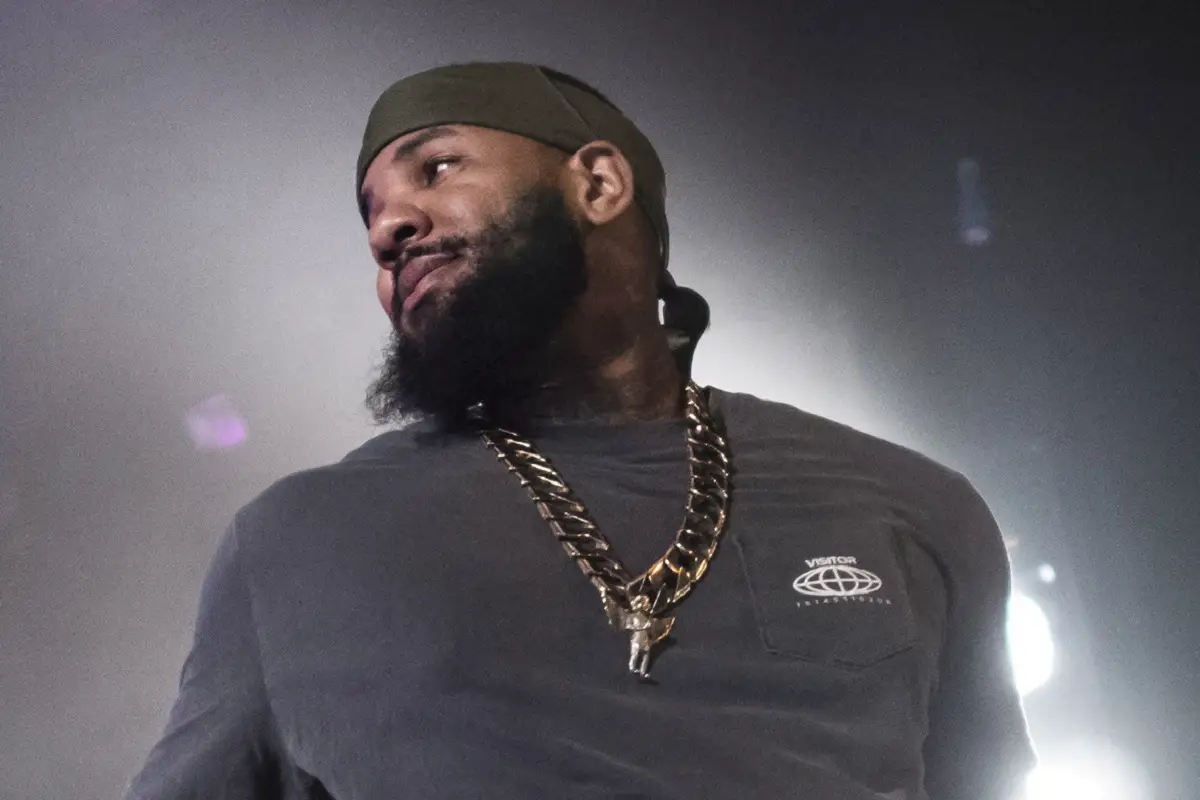
Every generation of West Coast hip-hop has featured artists who carried California's sound, identity and history into a new era.
For the early 2000s, that artist was The Game.
At a time when much of mainstream hip-hop attention had shifted toward New York, Atlanta, Miami and other regions, the Compton rapper emerged with a style that honored West Coast traditions while introducing a new generation of listeners to California rap.
His 2005 major-label debut, The Documentary, became one of the defining West Coast albums of the decade. The project combined Dr. Dre's executive guidance, major-label resources, high-profile production and The Game's detailed Compton storytelling.
The album did more than establish a successful new artist.
It helped restore national attention to Los Angeles rap and reinforced the idea that West Coast artists could compete commercially without abandoning regional identity.
More than twenty years later, The Game's influence can still be heard in modern West Coast music, particularly among artists who combine personal storytelling, respect for hip-hop history and unmistakable California pride.
Key Takeaways
- The Game emerged when mainstream attention had moved away from West Coast hip-hop.
- The Documentary debuted at No. 1 on the Billboard 200 and became his commercial breakthrough.
- His music combined Compton storytelling, lyrical references and updated West Coast production.
- Dr. Dre, Aftermath Entertainment and G-Unit helped provide the infrastructure surrounding his debut.
- His conflict with G-Unit forced him to establish an identity independent of the collective.
- Albums such as Doctor's Advocate, LAX, The Documentary 2 and 1992 extended his catalog across multiple eras.
- His longevity helped preserve mainstream visibility for lyric-driven West Coast rap.
The Right Artist at the Right Time
By the early 2000s, many listeners believed West Coast hip-hop had lost some of the commercial momentum it enjoyed during the 1990s.
California continued producing important artists, producers and independent movements, but the national spotlight had shifted.
Southern hip-hop was expanding rapidly. New York remained commercially powerful. New regional movements were transforming radio, mixtapes and music television.
The West Coast did not lack talent.
It lacked a new major-label artist capable of becoming a national focal point.
The Game arrived at exactly the right moment.
His combination of street storytelling, lyrical confidence, hip-hop knowledge and unmistakable regional identity positioned him as a natural representative of a new West Coast era.
He sounded connected to the region's history without appearing trapped inside it.
The Game did not revive West Coast hip-hop by recreating the 1990s. He carried its identity into a new commercial era.
Compton Gave His Music a Clear Foundation
The Game's identity was inseparable from Compton.
The city had already produced some of hip-hop's most important artists and groups, including N.W.A, Dr. Dre, Eazy-E, DJ Quik and MC Eiht.
That history created opportunity and pressure.
Any new Compton artist entering the mainstream would immediately be compared with the figures who established the city's reputation.
The Game responded by openly acknowledging the history rather than pretending it did not exist.
His lyrics referenced West Coast albums, artists, neighborhoods, conflicts and moments from hip-hop history.
Those references communicated that he was both a participant in the culture and a serious student of it.
Dr. Dre Recognized the Opportunity
The Game's early mixtape work attracted the attention of Dr. Dre, who signed him to Aftermath Entertainment in the early 2000s.
Dre's involvement immediately connected The Game to one of the most important creative lineages in West Coast hip-hop.
It also placed high expectations on the emerging rapper.
Artists associated with Dr. Dre were expected to deliver polished music, strong performances and complete album campaigns.
Dre's executive guidance helped place The Game inside a professional development system that included production, songwriting, vocal direction, collaborations and major-label marketing.
The partnership gave The Game access to infrastructure, but his own identity remained the reason listeners connected.
G-Unit Expanded His National Reach
The Game was also associated with G-Unit Records during the period surrounding his debut.
At the time, 50 Cent and G-Unit were among the most commercially dominant forces in hip-hop.
That connection introduced The Game to a large national audience before The Documentary arrived.
50 Cent appeared on “Westside Story,” “How We Do” and “Hate It or Love It,” three records that became central to the album's success.
The alliance created a powerful launch system:
- Dr. Dre provided executive guidance and production authority.
- Aftermath connected the project to a respected creative institution.
- G-Unit provided commercial momentum and audience access.
- The Game supplied a distinct Compton identity and lyrical perspective.
That combination helped make The Documentary one of the most anticipated rap debuts of its era.
The Documentary Became an Immediate Breakthrough
Released in January 2005, The Documentary debuted at No. 1 on the Billboard 200.
The album introduced The Game as more than a regional prospect.
It presented him as an artist capable of balancing street credibility, lyrical substance, commercial singles and major production.
The project included contributions from Dr. Dre, Kanye West, Just Blaze, Timbaland and other established producers.
Rather than allowing those names to overpower him, The Game used the varied production to demonstrate range.
He could sound natural over polished West Coast production, soul samples, cinematic arrangements and radio-ready records.
The album's success proved that a new Compton rapper could become a mainstream star while treating West Coast history as a central part of the presentation.
“Westside Story” Announced His Mission
“Westside Story” functioned as a mission statement.
The record introduced The Game through dark production, direct regional references and a vocal performance designed to establish authority.
Rather than presenting himself as disconnected from earlier California artists, he openly positioned his career within the larger West Coast tradition.
The song communicated that his breakthrough was not only about personal success.
It was also about restoring visibility to the region.
“How We Do” Demonstrated Commercial Power
“How We Do,” featuring 50 Cent, gave The Game a major commercial record without removing his West Coast identity.
Dr. Dre and Mike Elizondo's production created a minimal, immediately recognizable foundation built around drums, keyboards and controlled space.
The Game and 50 Cent used contrasting deliveries that made the collaboration effective.
The record reached listeners who may not have been following Los Angeles rap closely and helped turn The Game into a mainstream name.
“Hate It or Love It” Added Emotional Depth
“Hate It or Love It” became one of the most enduring songs associated with The Game's debut.
The record combined a reflective soul sample with autobiographical writing about struggle, ambition and survival.
The Game and 50 Cent delivered performances that felt more personal than a conventional victory anthem.
Its success demonstrated that mainstream rap records could remain emotionally detailed.
The song also became one of the clearest examples of the creative chemistry that existed before The Game's relationship with G-Unit collapsed.
“Dreams” Showed His Storytelling Ability
Produced by Kanye West, “Dreams” demonstrated The Game's ability to connect personal ambition with hip-hop history.
The record included references to major artists, losses and cultural moments while presenting The Game's own career as part of a larger narrative.
This referential writing became one of his defining techniques.
He frequently used names, albums and historical events as storytelling tools rather than isolated mentions.
For listeners familiar with hip-hop history, those references created additional meaning.
The Album Balanced History and Modern Production
The Documentary worked because it respected West Coast tradition without sounding like an attempt to reproduce an earlier decade.
The album included G-funk influence, cinematic production, soul samples, mainstream hooks and early-2000s drum programming.
This mixture allowed longtime West Coast listeners to recognize familiar elements while giving younger audiences a contemporary entry point.
The Game did not need every song to use the same production style.
His voice, subject matter and regional references created continuity across the project.
Representing Compton Became Central to His Brand
Throughout his career, The Game consistently represented Compton.
Rather than distancing himself from his hometown after achieving success, he made it central to his public identity.
Neighborhood references, local history, gang culture, family experiences and West Coast imagery appear throughout his catalog.
This connection helped audiences understand where the music came from.
Regional identity became more than a slogan.
It functioned as a narrative framework connecting his albums, videos, interviews and collaborations.
Authenticity Strengthened His Audience Connection
Hip-hop audiences frequently evaluate whether an artist's presentation feels consistent with the life and environment described in the music.
The Game's detailed Compton references helped create a sense of specificity.
He did not rap about a generic version of California.
He referenced streets, artists, local conflicts, neighborhoods and cultural details that made the music feel connected to a real place.
That specificity strengthened his credibility with listeners who valued regional authenticity.
Carrying the West Coast Legacy Forward
The Game regularly acknowledged the influence of artists who came before him.
His music referenced N.W.A, Dr. Dre, Eazy-E, Ice Cube, Snoop Dogg, 2Pac, DJ Quik and other foundational figures.
These references served several purposes.
They demonstrated knowledge.
They connected his career to West Coast history.
They also introduced younger listeners to earlier albums and artists.
Instead of attempting to replace California's legacy, The Game positioned himself as someone extending it.
His Respect for Hip-Hop History Became a Signature
The Game's catalog is filled with references to artists, albums, producers and historical moments from multiple regions.
This made him one of the most visibly referential rappers of his generation.
At its best, this technique created layers of meaning and rewarded knowledgeable listeners.
It also reinforced the idea that new artists did not need to ignore hip-hop history to establish their own identities.
The Game could acknowledge his influences while still speaking in a recognizable voice.
The G-Unit Conflict Forced a Reinvention
The Game's relationship with G-Unit deteriorated shortly after the success of The Documentary.
The conflict became one of the most visible rap disputes of the mid-2000s.
For The Game, the split created a serious career test.
His biggest singles included 50 Cent, and his debut had benefited from the commercial power surrounding G-Unit.
Critics questioned whether he could remain successful without that alliance.
The dispute forced him to establish a clearer identity independent of the collective that helped launch him.
Doctor's Advocate Proved He Could Continue
Released in 2006, Doctor's Advocate became one of the most important albums in The Game's career.
The project arrived without new Dr. Dre production, despite its title and emotional connection to Dre.
This created another challenge.
The Game had to prove that the musical identity established on The Documentary did not depend entirely on Dre's direct involvement.
The album debuted at No. 1 on the Billboard 200 and produced major records including “It's Okay (One Blood),” “Let's Ride” and “Wouldn't Get Far.”
Its success demonstrated that The Game could survive the G-Unit split and continue operating as a major artist.
The Title Reflected a Complicated Relationship
Doctor's Advocate reflected The Game's public admiration for Dr. Dre and his disappointment that Dre was not directly involved in the album.
The title track addressed that relationship openly.
This willingness to turn industry tension into personal music became another defining characteristic of The Game's writing.
He frequently incorporated real disputes, alliances and disappointments into his records.
That approach made his catalog feel closely connected to the events surrounding his career.
Lyrics Remained Central
Throughout changing trends in hip-hop, The Game remained committed to lyric-driven music.
His songs frequently combine:
- Autobiographical storytelling
- Street narratives
- Hip-hop references
- Regional pride
- Battle rap
- Personal reflection
- Industry commentary
He often writes densely, placing names, albums, neighborhoods and historical references inside the same verse.
This approach rewards repeated listening because individual lines may connect to several moments in hip-hop history.
His Delivery Created Immediate Recognition
The Game's deep, forceful vocal tone became one of his most recognizable qualities.
His delivery could sound aggressive without requiring constant shouting.
He frequently used pauses, emphasis and controlled pacing to make individual lines land clearly.
That vocal presence allowed him to compete on records with high-profile collaborators while preserving his identity.
LAX Extended His Commercial Run
Released in 2008, LAX continued The Game's position as one of the most visible West Coast rappers of the decade.
The album included “My Life” featuring Lil Wayne, one of the most recognizable records from that period of his career.
LAX also demonstrated his ability to work with artists outside the West Coast while maintaining a California-centered identity.
By this point, collaboration had become an established part of his album strategy.
Collaboration Expanded His Reach
The Game's albums regularly feature artists from different regions, generations and musical styles.
These collaborations helped expose his music to broader audiences and demonstrated his ability to adapt to different vocal and production environments.
Across his catalog, he has worked with artists connected to West Coast rap, New York lyricism, Southern hip-hop, R&B and contemporary mainstream music.
The partnerships also reflected his interest in hip-hop as a national culture rather than a closed regional competition.
The R.E.D. Album Delivered Another No. 1
Released in 2011, The R.E.D. Album became another Billboard 200 No. 1 album for The Game.
The project arrived during another changing period in hip-hop, when streaming, blogs and social media were beginning to reshape music discovery.
Its success demonstrated that The Game could remain commercially visible beyond the mid-2000s era that established him.
Jesus Piece Explored Faith and Contradiction
Jesus Piece, released in 2012, examined religion, morality, street life and personal contradiction.
The album's concept reflected The Game's willingness to build projects around themes rather than treating every release as a disconnected collection of songs.
It also included a wide range of collaborators, reinforcing his ability to operate across different parts of the music industry.
The Documentary 2 Revisited His Breakthrough
In 2015, The Game released The Documentary 2 and The Documentary 2.5 around the tenth anniversary of his debut.
The projects allowed him to revisit the identity and expectations associated with The Documentary while working with a new generation of artists and producers.
Rather than attempting to erase the importance of his debut, he used its legacy as a framework for evaluating his development.
The albums featured established West Coast figures alongside contemporary artists, creating another bridge between generations.
1992 Returned to Personal History
Released in 2016, 1992 drew directly from The Game's early life and the social environment surrounding Los Angeles during that year.
The project explored gang culture, family experiences, regional conflict and formative moments from his youth.
Its autobiographical focus reinforced one of his greatest strengths: connecting personal history to broader West Coast culture.
Born 2 Rap Emphasized Longevity
Born 2 Rap, released in 2019, was initially presented as a potential final album.
The large project reflected The Game's belief in his identity as a lifelong rapper rather than an artist defined only by one commercial period.
Its title communicated that lyricism remained central to his self-image.
The project also demonstrated his willingness to continue creating lengthy, collaboration-heavy albums during an era increasingly focused on short releases and rapid consumption.
DRILLMATIC Heart vs. Mind Entered Another Era
The Game released DRILLMATIC Heart vs. Mind in 2022.
The project connected his established lyrical style to contemporary production and a large group of collaborators.
Its scale reflected the same ambition present throughout much of his catalog.
The album also demonstrated that The Game remained willing to engage with new sounds without abandoning the references, storytelling and West Coast identity associated with his earlier work.
One of West Coast Hip-Hop's Deepest Catalogs
The Game's catalog extends far beyond his debut.
Major projects include:
- The Documentary
- Doctor's Advocate
- LAX
- The R.E.D. Album
- Jesus Piece
- The Documentary 2
- The Documentary 2.5
- 1992
- Born 2 Rap
- DRILLMATIC Heart vs. Mind
This body of work documents more than twenty years of changes in production, distribution, collaborations and audience behavior.
Few mainstream West Coast rappers from his generation have maintained such an extensive album catalog.
Consistency Became Part of His Legacy
The Game's longevity does not mean every album received the same commercial response or critical reputation.
It means he continued creating substantial projects across multiple industry eras.
He moved from CDs and music television into downloads, blogs, streaming and short-form social media without abandoning the album format.
That commitment helped preserve a version of West Coast hip-hop centered on full projects, lyricism and catalog development.
More Than Commercial Success
Album sales and chart positions tell only part of the story.
The Game helped restore confidence within West Coast hip-hop during an important transitional period.
His success demonstrated that California artists could compete commercially without removing regional references or adopting an entirely different identity.
His breakthrough also created renewed media interest in Los Angeles artists, producers and street culture.
He did not single-handedly create every opportunity that followed.
However, his visibility helped reopen mainstream attention for the region.
He Connected Two Generations of West Coast Rap
The Game emerged close enough to the 1990s era to work directly with many of its defining artists and producers.
He also remained active long enough to collaborate with artists from the Kendrick Lamar generation and beyond.
This position made him an important bridge.
His catalog connects N.W.A, Death Row, Aftermath, G-Unit, blog-era rap, streaming-era releases and modern California hip-hop.
Conflict Became Part of His Public Identity
The Game's career has included numerous public disputes, diss records and industry conflicts.
These moments generated attention but sometimes distracted from his music.
A complete assessment of his career must acknowledge both sides.
Conflict strengthened his reputation as a competitive rapper and produced memorable battle records.
It also created instability, damaged relationships and occasionally overshadowed albums or other creative work.
His legacy is therefore more complicated than a simple success narrative.
His Competitive Instinct Strengthened His Rapping
Battle rap remained an important part of The Game's identity.
Public disputes often pushed him toward long-form diss records, freestyles and technically focused performances.
Those records demonstrated stamina, detailed recall and the ability to build narratives around real industry relationships.
Even listeners who disagreed with individual conflicts often recognized his willingness to compete lyrically.
The Game's Influence on Younger Artists
Many younger West Coast rappers inherited an industry in which regional pride and mainstream ambition no longer appeared incompatible.
The Game helped reinforce that possibility.
His career demonstrated that an artist could:
- Represent a specific California city
- Work with artists from other regions
- Build full-length albums around personal history
- Reference earlier generations openly
- Compete commercially without hiding regional identity
- Maintain a catalog across multiple decades
His Career Offers Lessons for Independent Artists
The Game's rise involved major-label infrastructure, but several lessons remain useful for independent artists.
A clear hometown identity can strengthen rather than limit a career.
Knowledge of music history can give an artist greater context and creative depth.
Major collaborations can expand reach, but artists still need identities capable of surviving after those relationships change.
A strong debut creates opportunity, but a catalog establishes longevity.
Conflict may generate attention, but consistent music determines whether audiences remain engaged.
The Importance of Surviving the Launch System
Many artists become closely associated with the executives, labels or collectives that introduce them.
The real test begins when those relationships change.
The Game's post-G-Unit career demonstrated the importance of building a public identity strong enough to continue after the original launch structure disappears.
Doctor's Advocate was especially important because it proved listeners were following The Game himself rather than only the larger brands surrounding his debut.
Recent Activity Continues Expanding the Catalog
More than twenty years after The Documentary, The Game remains active through recordings, collaborations and live performances.
His official streaming profiles continued listing new singles in 2025 and 2026, demonstrating that his recording career remains ongoing.
That continued activity adds another dimension to his legacy.
He is not remembered only as an artist from the early 2000s.
He remains part of the current West Coast music ecosystem.
Longevity Became One of His Greatest Accomplishments
Hip-hop changes quickly.
Production styles, distribution systems, media platforms and audience expectations can transform within a few years.
Remaining active for more than two decades requires adaptation.
The Game moved through several eras without completely abandoning the lyrical references, deep vocal tone and Compton identity that established him.
That balance between adaptation and continuity is one of his most significant achievements.
Why The Game Mattered to West Coast Hip-Hop
The Game became important because his breakthrough represented more than one successful album.
He arrived when the West Coast needed a new mainstream focal point.
He treated regional history as an asset.
He used Compton identity as the foundation of a national career.
He proved that a lyric-driven California rapper could succeed within the commercial environment of the mid-2000s.
He then continued releasing albums long after the original partnerships surrounding his debut had ended.
Looking Ahead
Hip-hop constantly introduces new stars.
Few, however, arrive at moments when an entire region needs renewed momentum.
The Game did exactly that.
By combining lyrical ability, commercial appeal, collaboration and unwavering pride in Compton, he helped remind the music industry why the West Coast remained one of hip-hop's most important creative centers.
His legacy extends beyond platinum albums and successful singles.
It includes helping carry California rap into a new generation while preserving the artists, albums and cultural history that inspired him.
As discussions continue about the development of 21st-century West Coast hip-hop, The Game's name will remain central to the period when Los Angeles returned to the mainstream spotlight.
Frequently Asked Questions
How did The Game help revive West Coast hip-hop?
The Game helped revive West Coast hip-hop by bringing a distinctly Compton-centered style back into the mainstream during the early 2000s. His debut album, The Documentary, combined major commercial records with West Coast storytelling and regional pride.
When was The Documentary released?
The Documentary was released in January 2005. It debuted at No. 1 on the Billboard 200 and became The Game's major-label breakthrough.
What are The Game's biggest songs?
His best-known songs include “How We Do,” “Hate It or Love It,” “Dreams,” “Westside Story,” “It's Okay (One Blood)” and “My Life.”
How was Dr. Dre involved in The Game's career?
Dr. Dre signed The Game to Aftermath Entertainment and served as an executive producer on The Documentary. Dre's guidance and production network helped shape the presentation and sound of The Game's debut.
Was The Game a member of G-Unit?
The Game was affiliated with G-Unit Records during the launch of his debut album. His relationship with 50 Cent and the group later deteriorated, leading to a highly publicized conflict.
What happened after The Game left G-Unit?
The Game released Doctor's Advocate in 2006. The album debuted at No. 1 and demonstrated that he could remain commercially successful outside his original G-Unit affiliation.
What are The Game's most important albums?
His major albums include The Documentary, Doctor's Advocate, LAX, The R.E.D. Album, Jesus Piece, The Documentary 2, 1992, Born 2 Rap and DRILLMATIC Heart vs. Mind.
Is The Game still releasing music?
Yes. The Game remained active with new singles and performances through 2026, continuing a recording career that began in the early 2000s.