The days of uploading a song and hoping it becomes successful are largely over.
Thousands of new songs arrive on streaming platforms every hour, giving listeners more music than they could ever consume. While this creates incredible opportunities for independent artists, it also makes competition more intense than at any other point in music history.
Success today is rarely determined by talent alone.
Artists who consistently build audiences often approach every release like a business campaign instead of a single upload. They understand that every song has a life cycle—from planning and promotion to fan engagement and long-term catalog growth.
A well-developed music release strategy helps artists maximize each release instead of constantly chasing the next one.
Music Is Content, But Every Release Is Also a Business Decision
Many artists spend months perfecting a record but only a few hours thinking about how it will actually reach listeners.
That imbalance can limit even exceptional music.
Professional release planning considers questions that extend far beyond recording.
- When should the song be released?
- Which audience is most likely to connect with it?
- What visual content supports the release?
- Which streaming platforms deserve the most attention?
- How will the song continue generating attention after release day?
These decisions influence whether a song disappears after a week or continues attracting listeners for months.
Planning Starts Long Before Release Day
Successful releases usually begin several weeks before the public hears the song.
This preparation gives artists time to create visual assets, schedule promotional content, pitch playlists, contact media outlets, organize interviews and coordinate marketing across multiple platforms.
Waiting until release day often means missing valuable opportunities.
Instead, experienced independent artists build anticipation through consistent storytelling.
Behind-the-scenes studio footage, cover art reveals, teaser videos and recording sessions all help audiences become invested before the music becomes available.
The goal is simple: create curiosity before asking people to listen.
Consistency Builds Audience Trust
Many independent artists release music randomly.
A single arrives.
Months pass.
Another appears without warning.
The cycle repeats.
From a business perspective, inconsistent releases make it difficult for fans to stay engaged.
Consistency doesn't necessarily mean releasing music every month.
It means developing a predictable relationship with your audience.
When fans know an artist communicates regularly, shares meaningful updates and releases music with purpose, they become more likely to follow future projects.
That consistency also strengthens an artist's overall brand identity.
Streaming Rewards Long-Term Activity
Streaming success rarely comes from one viral moment.
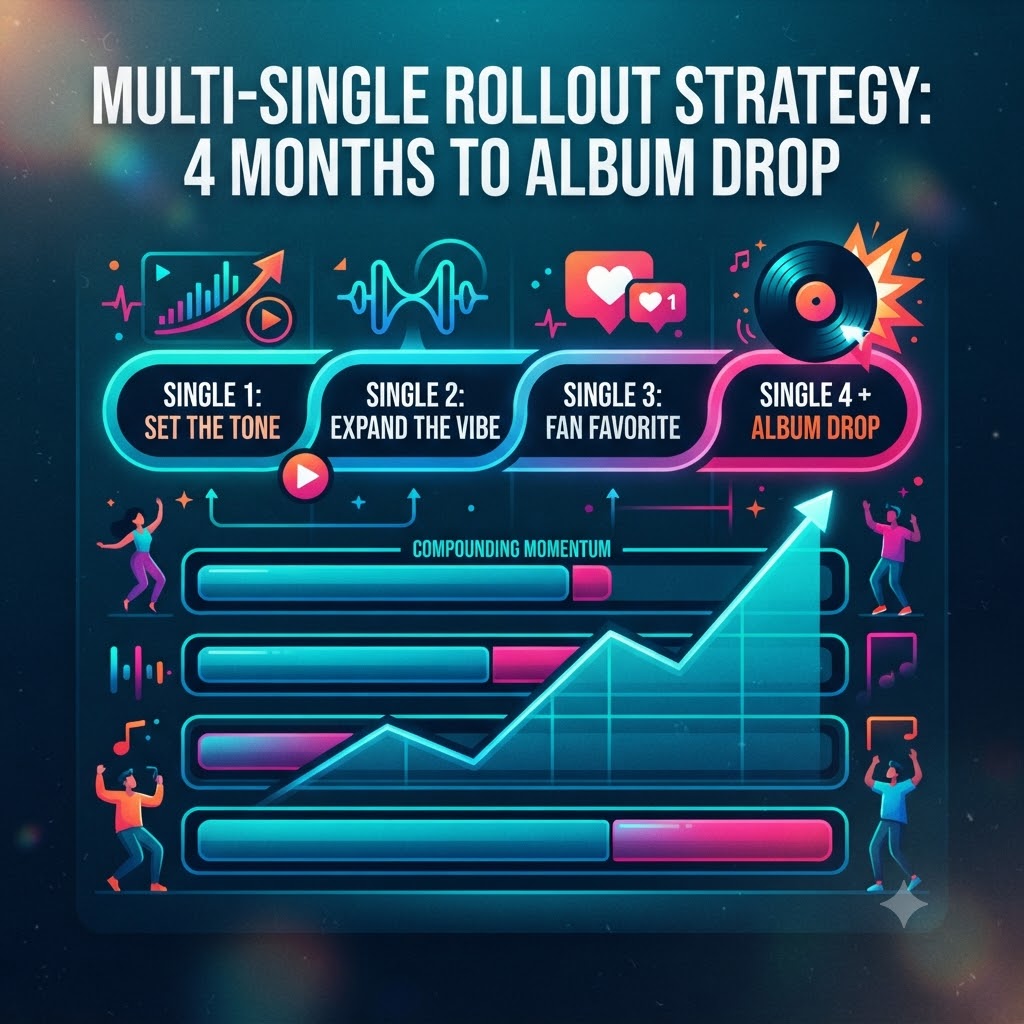
Most sustainable careers are built through an expanding catalog.
Every new release creates another opportunity for listeners to discover previous songs.
As an artist's catalog grows, so does the potential for playlist placements, algorithmic recommendations and repeat listening.
Each release becomes another entry point into an artist's body of work.
Over time, that momentum compounds.
Instead of relying on a single hit, artists create multiple opportunities for discovery.
Marketing Doesn't End After Release Day
One of the biggest misconceptions in independent music is that promotion ends once the song goes live.
In reality, release day is only the beginning.
Weeks after release, artists can continue generating attention through:
- Performance videos
- Lyric breakdowns
- Producer interviews
- Fan reactions
- Behind-the-scenes content
- Short-form video clips
- Studio documentaries
- Media interviews
- Community engagement
Every piece of content introduces the song to people who may have missed it the first time.
This extends the lifespan of a release while strengthening the artist's overall visibility.
Data Should Guide Future Releases
Today's artists have access to information previous generations never had.
Streaming dashboards, audience demographics and social media analytics provide valuable insight into listener behavior.
Instead of relying on assumptions, artists can identify:
- Cities with the strongest audiences
- Most popular songs
- Listener age groups
- Peak engagement times
- Best-performing promotional content
- Platform-specific audience behavior
These insights help shape future release strategies.
The result is smarter decision-making rather than guesswork.
Independent Labels Continue Raising Professional Standards
The modern independent music landscape has become increasingly sophisticated.
Many independent labels now emphasize long-term artist development, branding, strategic releases and catalog ownership alongside traditional music production.
Rather than focusing solely on individual singles, successful organizations often build complete creative ecosystems that include editorial content, visual storytelling, interviews, artist profiles and consistent audience engagement.
This broader approach helps artists develop recognizable brands while creating multiple paths for fans to discover their music organically.
The Long Game Wins
The artists who build lasting careers usually approach every release as one chapter in a much larger story.
Each song contributes to a growing catalog.
Each release introduces new listeners.
Each campaign expands audience awareness.
Rather than chasing overnight success, they focus on sustainable growth built through planning, consistency and continuous improvement.
A strong release strategy cannot guarantee a hit.
It can, however, ensure that every song receives the professional attention it deserves—giving artists the best possible opportunity to reach new audiences while building a career that lasts well beyond a single release.